
YES! – we could get long and boring so here is a quick take.
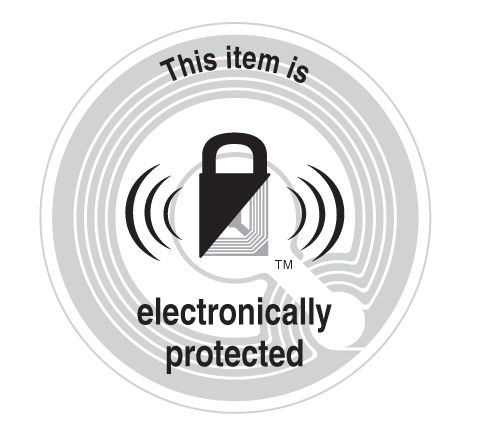
RF & AM tags (labels) are known as Electronic Article Surveillance, or EAS. EAS works like this; each product gets an EAS security label applied to it. This then communicates with an in-store antenna, usually near the store entry/exit. When items are purchased legitimately, the cashier deactivates the label or removes the tag. However, if the tag comes in range of the antenna, an alarm will sound.
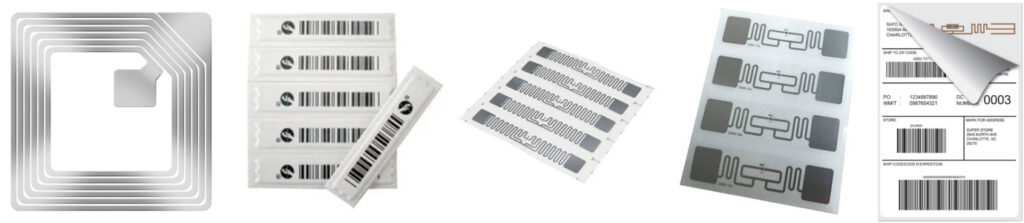
AM (acousto magnetic) labels, uses a transmitter to send out signals in bursts. These signals energize tags within the pedestal zone, and when the pulse ends, the tag responds. In the meantime, a receiver detects the tag’s signal. However, if an active tag passes between receivers, an alarm will sound.
RF (radio frequency) labels work very similarly. The tags communicate with an antenna or receiver, and if they pass too close to a receiver, an alarm will sound. RF is often used interchangeably with RFID (radio frequency identification), but an RFID label is a completely different piece of technology.
They come on a roll and can be automatically applied at rates up to 300 PPM.
RFID is currently very popular based on Walmart’s mandates. An RFID (Radio Frequency Identification) label is an electronic device that exchanges data with a radio frequency identification (RFID) reader by using radio waves.
Most RFID labels are made up of at least two main parts. The first an antenna, which receives radio frequency (RF) waves. The second is an integrated circuit (IC), which is used for processing and storing data, as well as modulating and demodulating the radio waves received/sent by the antenna.
An RFID label is like a barcode in that is container information, but RFID tags are far more advanced, sometimes referred to as smart label. RFID labels does not require line-of-sight and can be performed over a distance of a few meters. This also means that a single label can serve multiple readers at a time.
The kind of label depends on the product to which the label is attached. RFID systems can operate in either Ultra High Frequency (UHF), High Frequency (HF) or Low Frequency (LF). Labels can vary in terms of the frequencies on which they operate.
If you like we can even print / encode / apply using a Zebra or Sato print engine but that’s for another time.
Can we help you automatically generate lot codes, use by dates, or production date codes? Please contact us today! (800) 837-1309 or Sales@QLC-Labeling.com